2025
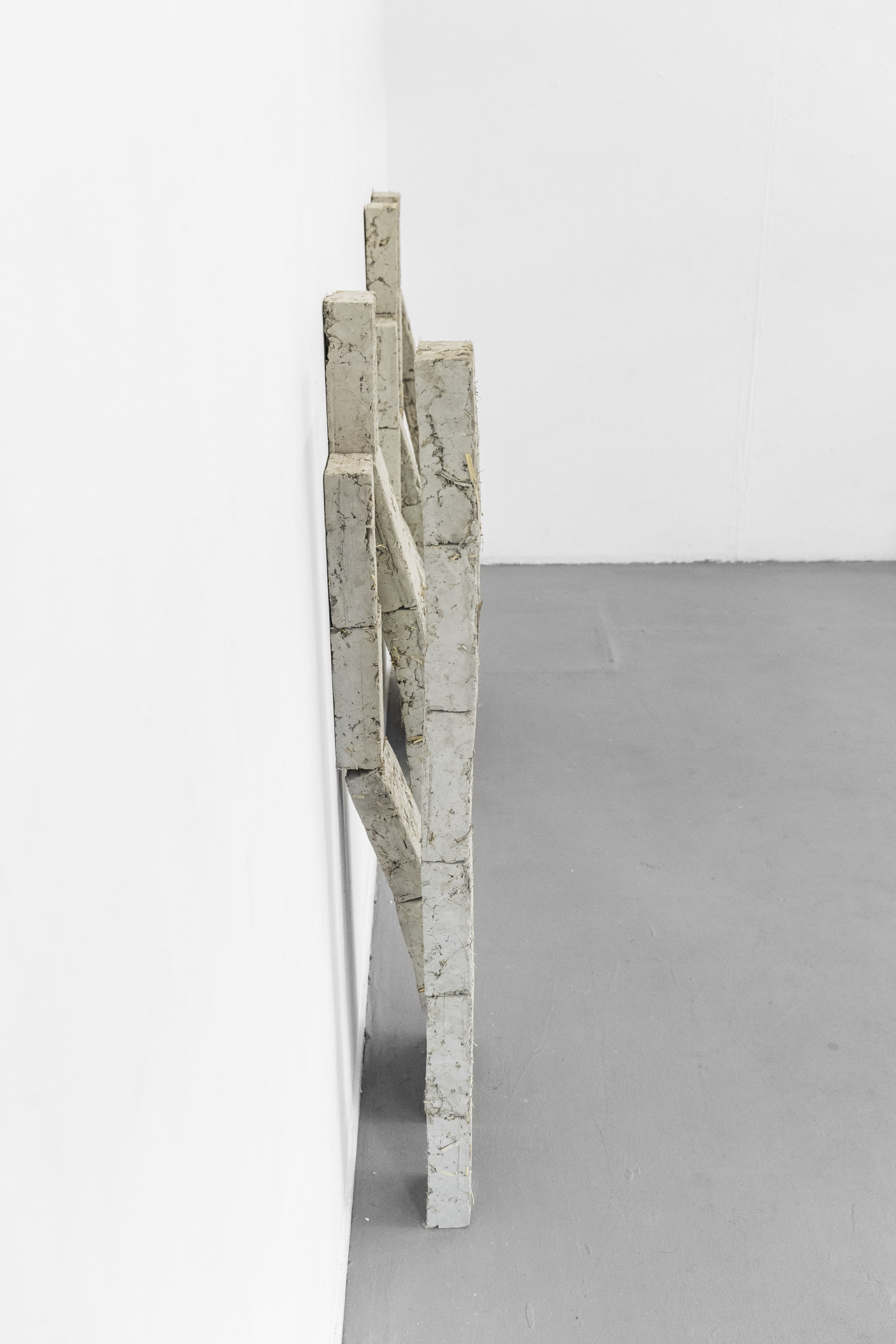
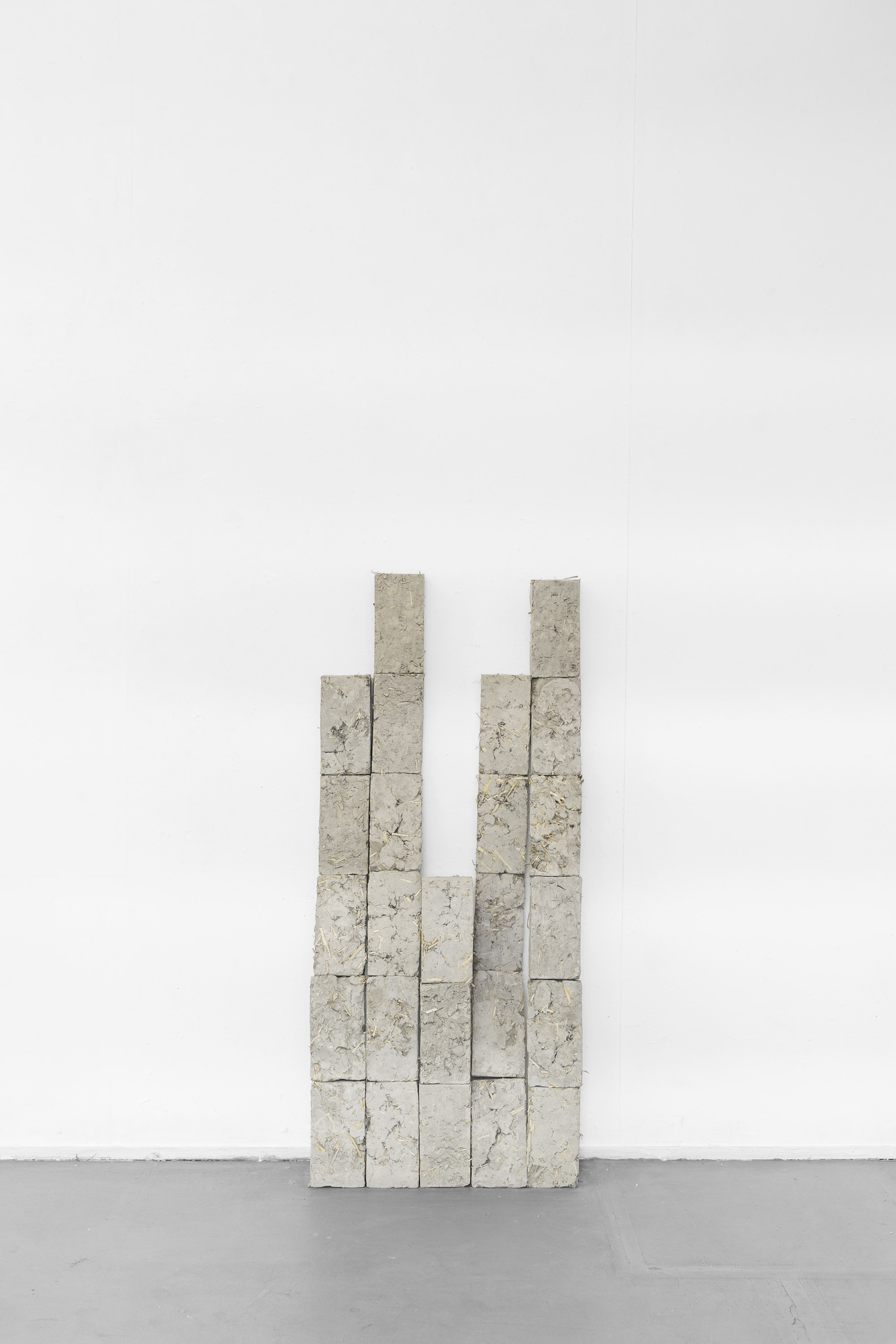
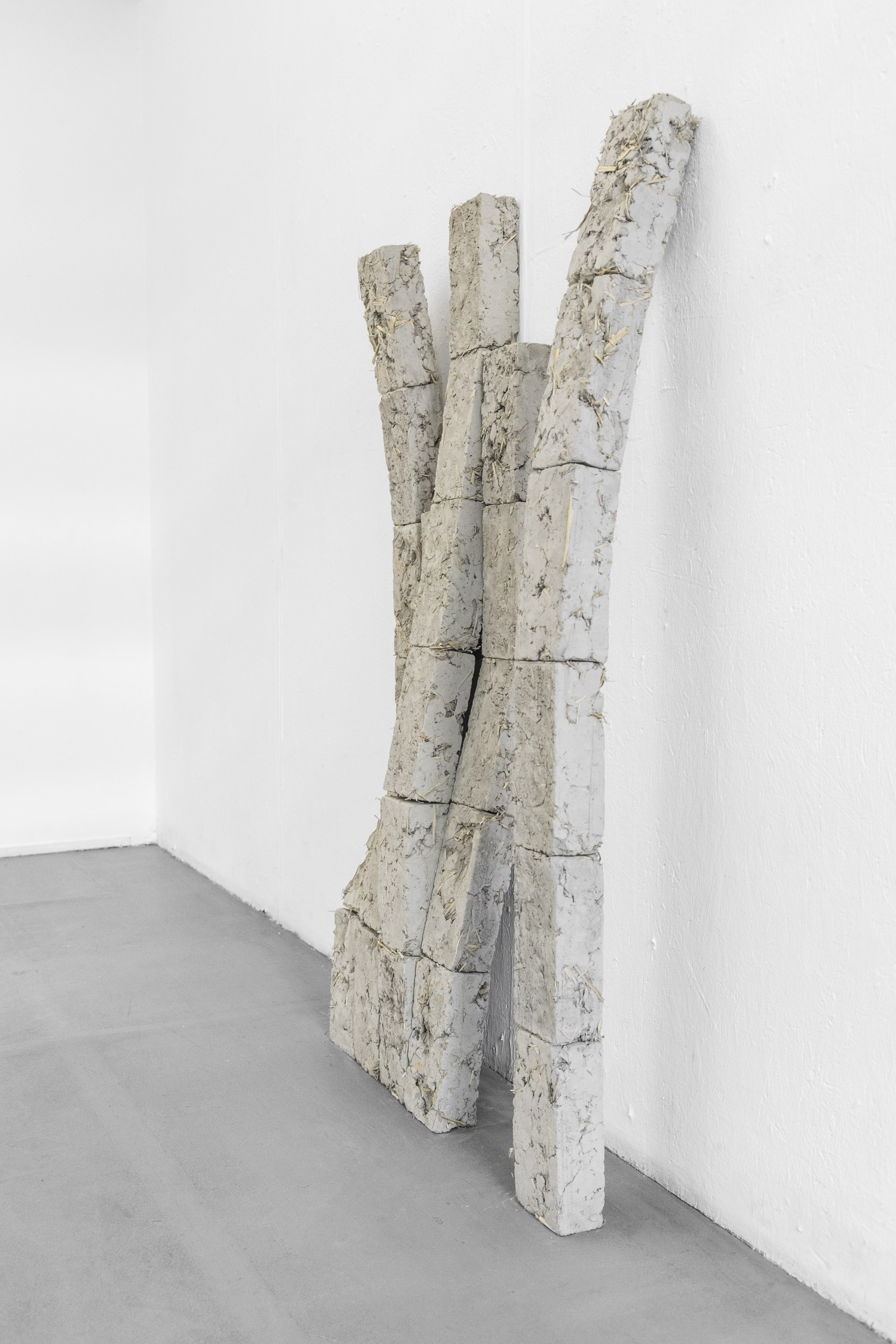
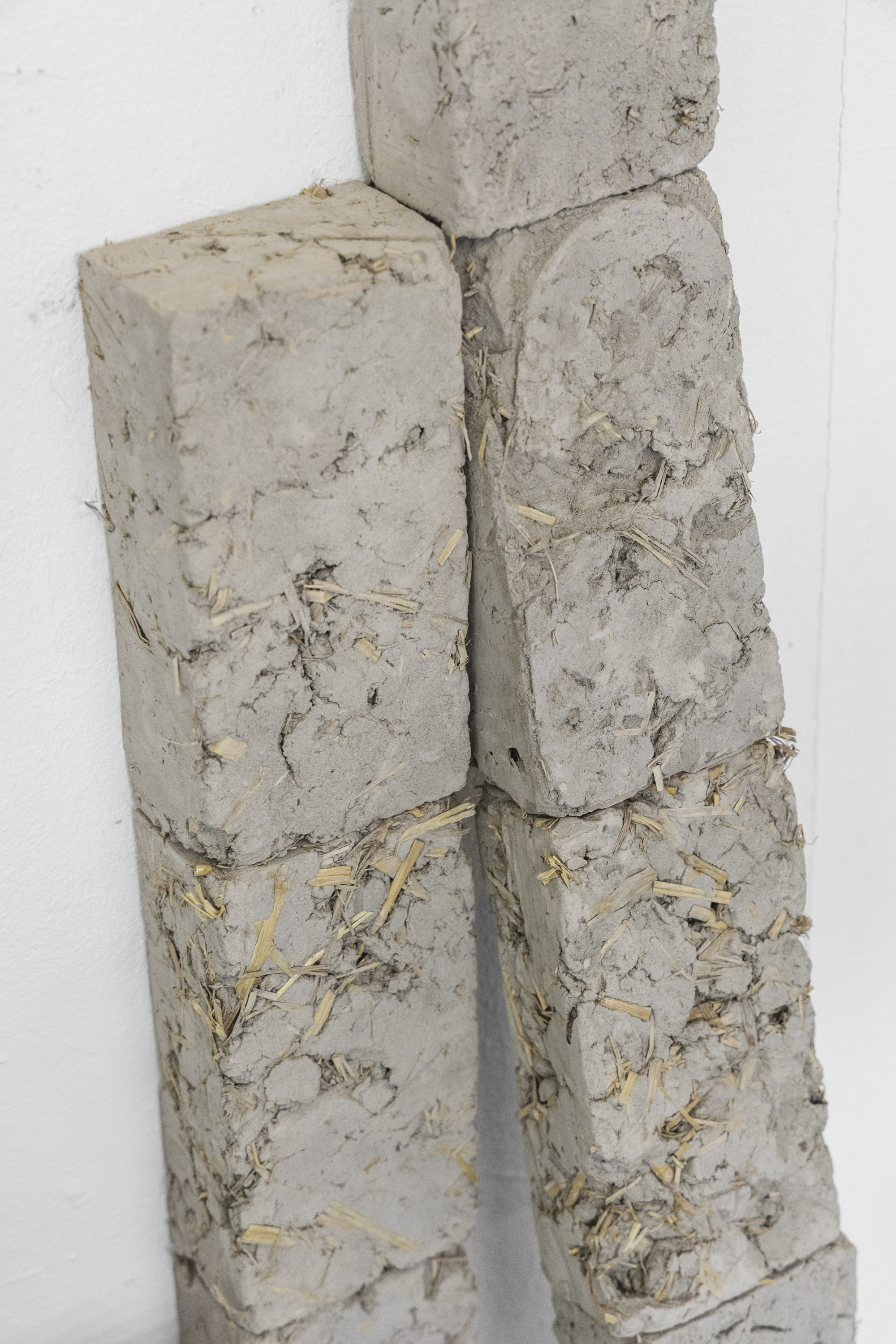
installation (clay, sand, straw)
variable dimensions
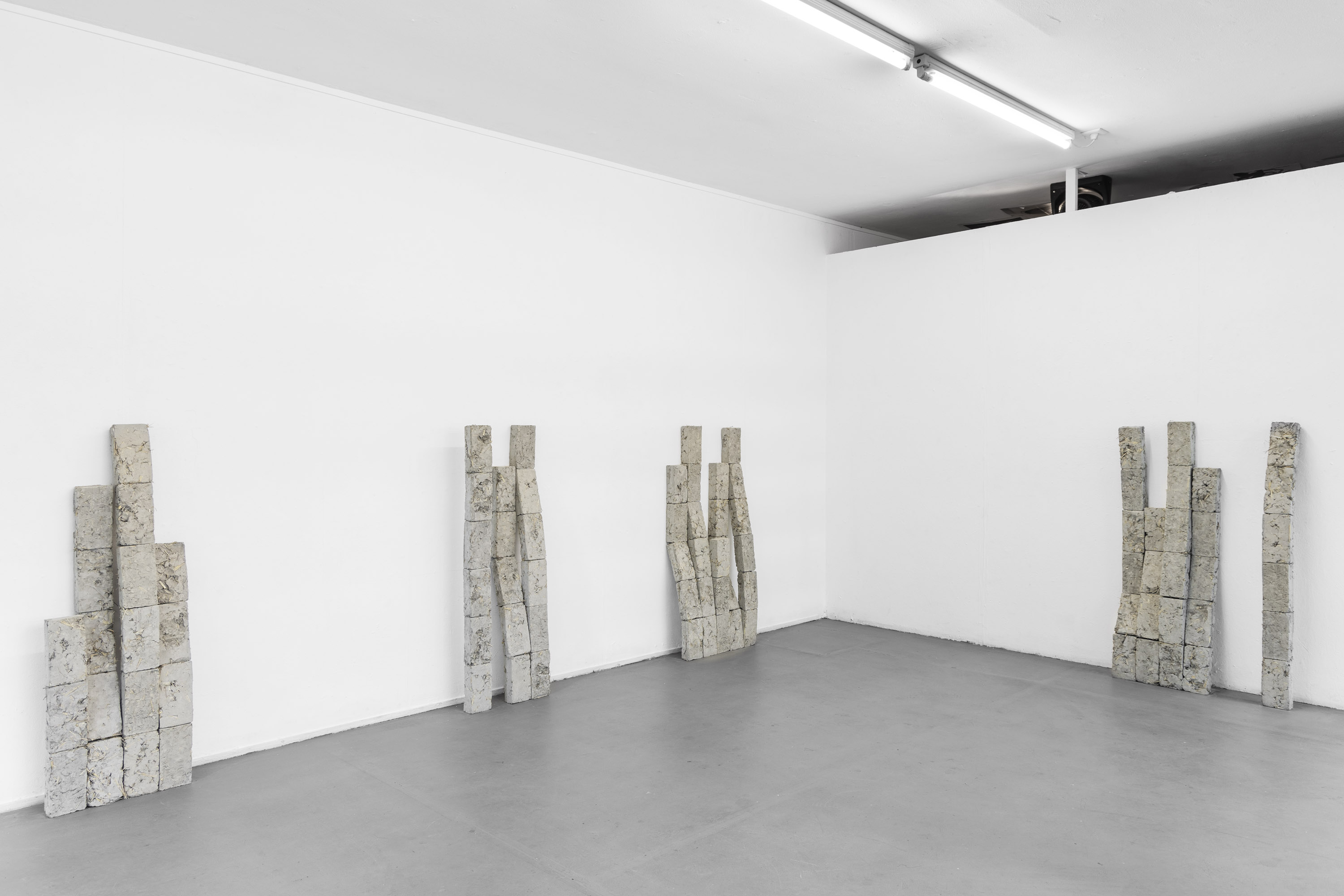
exhibition view @ Lokal-int
08.05–15.05.2025
solo exhibition
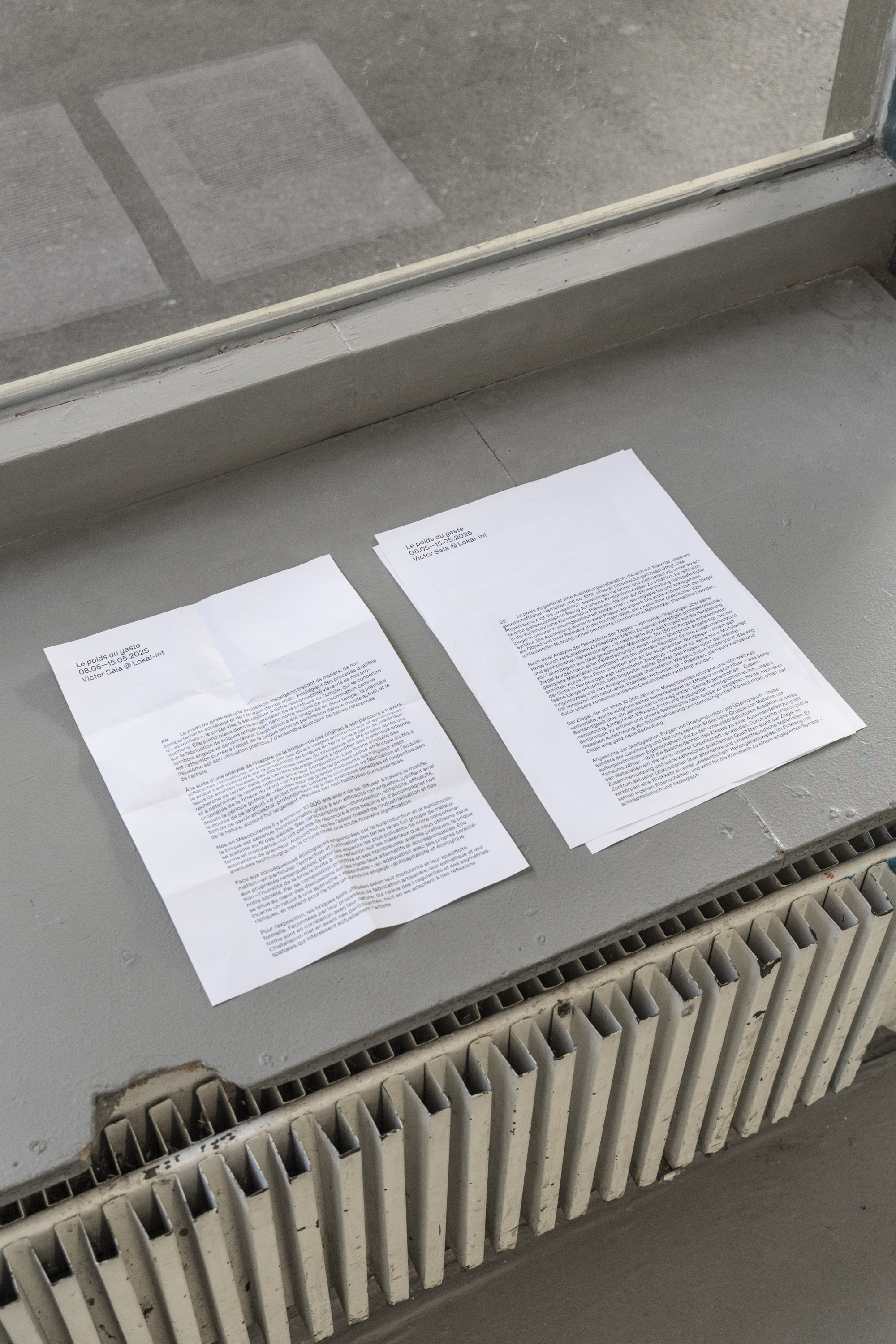
'Le poids du geste' is an exhibition-installation that addresses material, our societal behaviors, and the ethics behind our choices. Favoring processes deemed “essential,”
the project seeks to raise awareness about our responsibility toward the things we produce. It is part of the artist’s ongoing practice, which focuses on the making of handmade bricks within our consumer society, serving as a committed and critical symbol.
The exhibition unfolds in two stages: the first centers on the brick as an object, examining its relevance in today’s world, and the second explores its practical and collective use through references drawn from the artist’s practice.
Following an analysis of the brick’s history—from its origins to its journey through various civilizations, including its multiple architectural and symbolic uses—the project focused
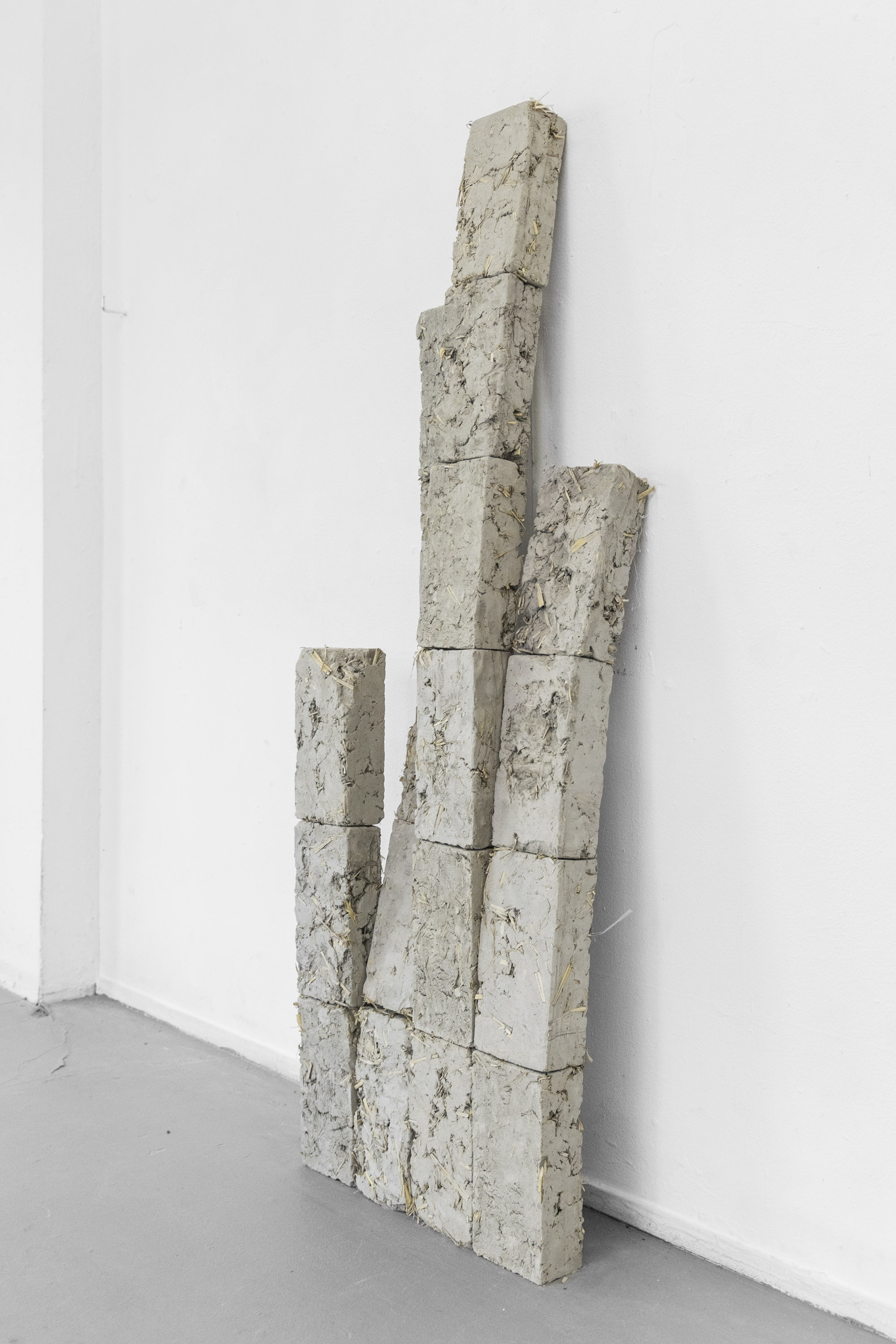
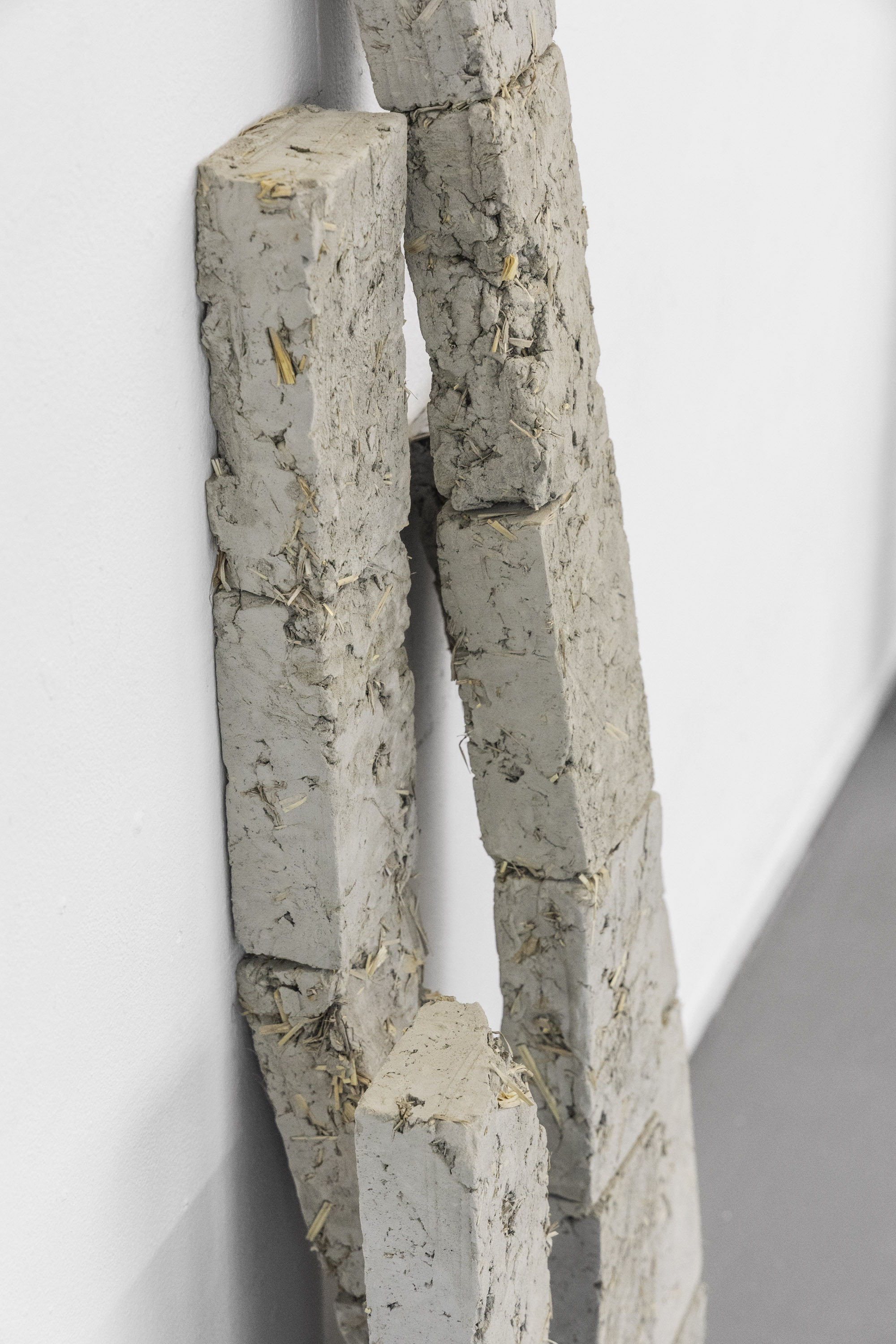
on producing raw earth bricks using locally sourced materials. The 150 bricks resulting from this process were created after field research in an unregulated quarry aimed at identifying suitable materials and determining the optimal recipe for their composition. Their shape draws inspiration from the properties of the Northern brick—a type widely used in Northern Europe since the Gothic period—known for its high modularity (its length being twice its width). The project highlights the manufacturing process and the transmission of this ancestral knowledge, deeply rooted in sensitive, nature-respecting practices now largely erased by our consumerist habits.
Born in Mesopotamia around 10,000 years ago before spreading across the globe, the brick became indispensable due to its remarkable efficiency, which explains its sustained relevance over the centuries. Its characteristics—composition, simplicity, efficiency, form, and modularity—have allowed it to meet our needs and support our ambitions of grandeur. Today, after the massive rise of industrialization and technological advancements, the brick takes on an entirely new significance.
In light of the ecological consequences brought about by overproduction and overconsumption—particularly the extraction and use of rare earth elements (a group of metals with remarkable properties), among the most polluting aspects of our consumption—the humility of the brick invites reflection on the materials we use in society. Through its primitive composition and many practical qualities, the brick lies at the heart of discussions about alternative and environmentally responsible materials. It embodies a return to an “essential” approach, aligned with its own characteristics, and becomes for the artist a committed symbol—anticapitalist and ecological.
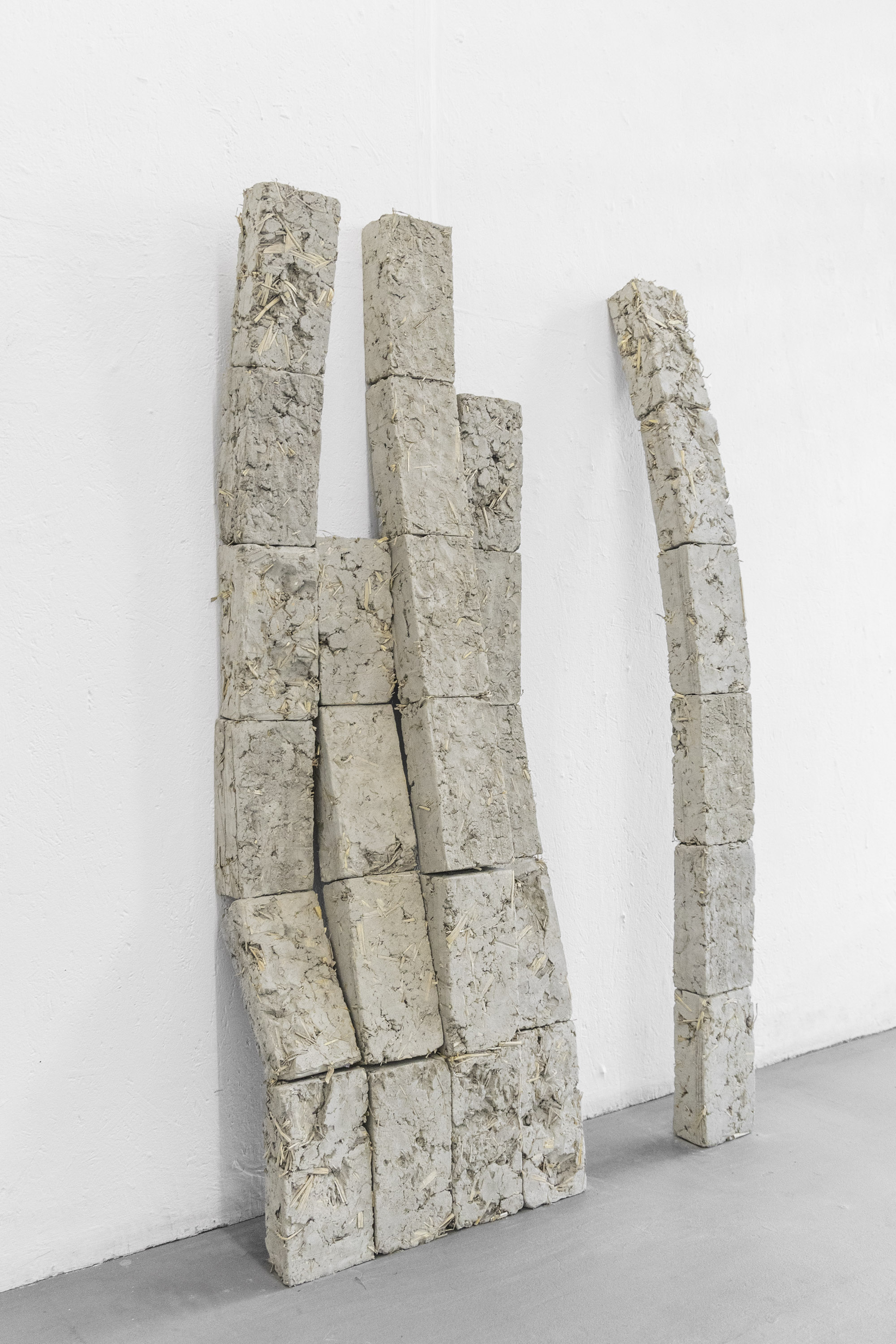
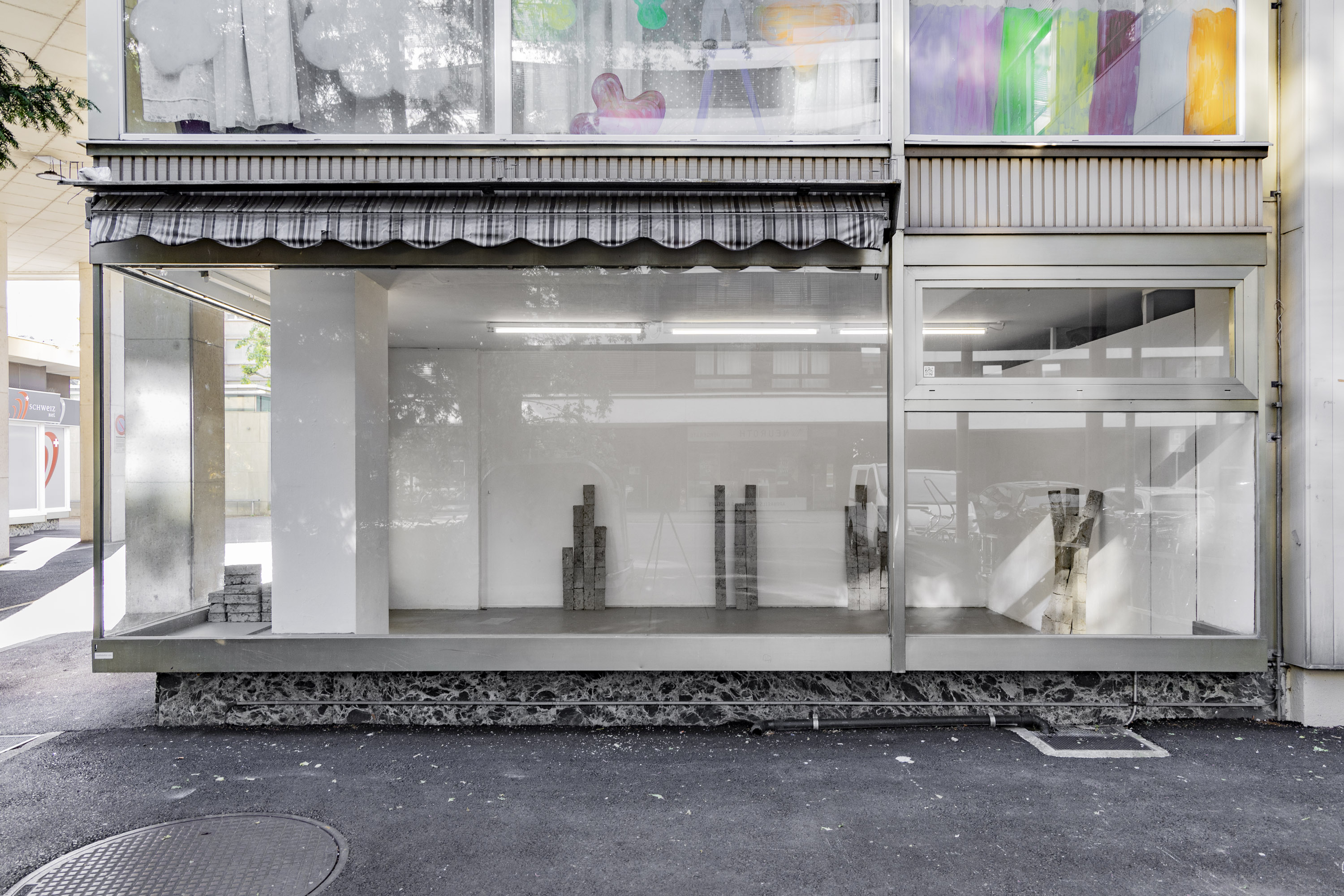
For the exhibition, the bricks are used according to their modularity and formal specificity. Shaped by their artisanal manufacturing process, their aesthetic and form correlate with their nature, which embraces irregularities and asymmetries. The installation highlights these qualities while adapting them to spatial concerns currently explored by the artist.
The installation seeks to engage with space through reflections on rhythm, proportion, and visual tension, always emphasizing the relationship between the work, the viewer, and the space. The intention is, in particular, to propose a voluminous installation within material constraints, which is why vertical systems were chosen—unstable due to the force of gravity, they reinforce this sense of tension and spatial interplay. Moreover, it is interesting not to control everything and to let the material express itself.
The project draws inspiration from the minimalist sculptural movement of the 1960s, which introduced new considerations regarding the neutral object as artwork—and as discourse—the choice of material based on its context, and an extreme reduction of form, carried forward by artists who deeply inspire the project, such as Richard Serra or Jackie Winsor.
Another movement that more subtly resonates with the project is Arte Povera. This état d’esprit favors raw, spontaneous, and poetic forms, often in direct connection with nature, time, or space. For the project, it aligns with the valorization of gesture and intention, as well as raw and accessible material.
These references, brought in as sources of inspiration, made sense in their respective contexts at the time but resonate with certain aspects of the project today and, according to the artist, offer relevant approaches to contemporary artistic practice—despite their strong ties to capitalism and gender inequality.
The installation proportionally represents the intentions and interests of the project. First, it highlights the brick-making process and places the irregular forms of the bricks at the heart of the installation concept. Then, based on the project’s spatial interests, the vertical systems—divided into asymmetrically repeated clusters throughout the space’s walls—form a strong and rhythmic narrative ensemble.
:)